
-
Register/Login on Totallympics!
Sign up to Totallympics to get full access to our website.
Registration is free and allows you to participate in our community. You will then be able to reply to threads and access all pages.
If you encounter any issues in the registration process, please send us a message in the Contact Us page.
We are excited to see you on Totallympics, the home of Olympic Sports!
Henry_Leon
-
Posts
3,850 -
Joined
-
Last visited
-
Days Won
15
Content Type
Forums
Events
Totallympics International Song Contest
Totallympics News
Qualification Tracker
Test
Everything posted by Henry_Leon
-
 Giro d’Italia Tour of Italy (Not the cycling race) In this space we present some cities inscribed on the UNESCO World Heritage List ALBEROBELLO Alberobello is a small town and comune of the Metropolitan City of Bari (Apulia), famous for its unique trulli buildings. The trulli of Alberobello have been designated as a UNESCO World Heritage Site since 1996. Trulli were generally constructed as temporary field shelters and storehouses or as permanent dwellings by small proprietors or agricultural labourers. Trullo is a house whose internal space is covered by a dry stone corbelled or keystone vault. The trullo is essentially a rural building type, with its thick walls and its inability to form multi-storey structures, it is an inefficient use of ground space and consequently ill-suited for high density settlement. Being constructed of small stones, however, it has a flexibility and adaptability of form making the design most helpful in tight urban situations. Today, the trulli are popular for tourists and are often bought and restored for general use. Anyone wishing to restore a trullo, however, needs to conform with many regulations, as trulli are protected under the UNESCO world heritage law.
 -
Results Update Event Link Click on the logo to open Quarterfinals First Leg, Day 1
-
Quarterfinals March 19th - March 28th, 2024 8 Teams, Home and Away Matches, the 4 winning Teams will qualify for the Semifinals Chelsea FC Olympique Lyonnais Paris Saint-Germain AFC Ajax SK Brann Kvinner SL Benfica FC Barcelona BK Häcken FF First Leg AFC Ajax 0 - 3 Chelsea FC Half-Time: 0-2 March 19th 2024, h. 18:45 (GMT +1), Johan Cruijff ArenA, Amsterdam SL Benfica 1 - 2 Olympique Lyonnais Half-Time: 1-0 March 19th 2024, h. 17:45 (GMT), Estádio do SL Benfica, Lisbon BK Häcken FF 1 - 2 Paris Saint-Germain Half-Time: 1-1 March 20th 2024, h. 21:00 (GMT +1), Hisingen Arena, Gothenburg SK Brann Kvinner 1 - 2 FC Barcelona Half-Time: 1-1 March 20th 2024, h. 21:00 (GMT +1), Asane Arena, Bergen Second Leg (6) Olympique Lyonnais 4 - 1 SL Benfica (2) Half-Time: 1-1 March 27th 2024, h. 18:45 (GMT +1), OL Stadium, Décines (4) Chelsea FC 1 - 1 AFC Ajax (1) Half-Time: 1-0 March 27th 2024, h. 17:45 (GMT), Stamford Bridge, London (5) FC Barcelona 3 - 1 SK Brann Kvinner (2) Half-Time: 1-0 March 28th 2024, h. 21:00 (GMT +1), Estadi Johan Cruyff, Sant Joan Despí (5) Paris Saint-Germain 3 - 0 BK Häcken FF (1) Half-Time: 1-0 March 28th 2024, h. 21:00 (GMT +1), Parc des Princes, Paris
-
Men's Basketball EB European EuroLeague 2023 - 2024
Henry_Leon replied to Henry_Leon's topic in Basketball Results Database
Results Update Event Link Click on the logo to open Regular Season Week 23, Day 1 -
Italian Festival ♪♫ ♪♫ ♪♫ In this space we present some dialectical and traditional songs GENOVA (Genoa) Fabrizio De André - Creuza de ma (Live) Ricchi e Poveri - Ma se ghe penso Is a traditional song in the Genoese dialect (1925 - words and music: Mario Cappello, with Attilio Margutti) The song tells the story of a Genoese who emigrated to Latin America in search of fortune, a very common social event between the end of the 19th century and the beginning of the 20th century, who, finding himself thinking about the beauty of his hometown, overwhelmed by nostalgia, decides to return, against his son's wishes. This version is from ligurian group Ricchi e Poveri
-
Giro d’Italia Tour of Italy (Not the cycling race) In this space we present some cities inscribed on the UNESCO World Heritage List MATERA Matera, a city in Basilicata known worldwide for its historic “Sassi”, two districts (Sasso Caveoso and Sasso Barisano), well-known for their ancient cave dwellings inhabited since the Paleolithic period. Listed among the UNESCO World Heritage Sites since 1993, along with the park of the Rupestrian Churches. The term "sasso" derives from Latin saxum, meaning rock or great stone. The "Sassi" of Matera are an urban settlement deriving from the various forms of civilization that have occurred over time. The streets in some parts of the Sassi often run on top of other houses. The ancient town grew up on one slope of the ravine created by the Gravina river. In the 1950s, the government of Italy forcefully relocated most of the population of the Sassi to areas of the developing modern city. Beset by extreme poverty and riddled with malaria, the unhealthy living conditions were considered inhuman, however, people continued to live in the Sassi. Until the late 1980s this was considered an area of poverty, since many of these houses were uninhabitable. The recovery action that began in the mid-1980s has a historical value however also has become more tourism-oriented, and it has promoted the regeneration of the Sassi with the aid of many stake-holders. The rock churches in the territory of Matera and along the ravines of the Murgia Materana park there are around 150 small churches carved into the rock, founded mainly in the Early Middle Ages, they are buildings carved into the rock. Initially born as religious structures, over time they have undergone various transformations of use, becoming homes or shelters for animals. They are an important testimony to the presence of communities of Benedictine, Lombard and Byzantine monks.
-
Grazie alle carte olimiche di Scherma (sciabola femminile) e Triathlon (ranking #8), gli azzurri qualificati per i Giochi Olimpici Estivi di Parigi 2024 sono attualmente 207 (101 uomini, 106 donne) in 24 discipline
-
Lisa Vittozzi won the Crystal Globe after finishing second in 2019 and third last season. Won individual and pursuit cups Season podium: 5 victories (WC gold included) – three seconds (two silvers at WC) and two third places. Congratulations deserved!!!!
-
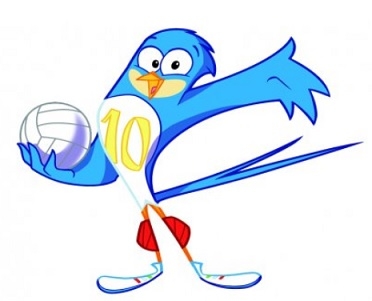
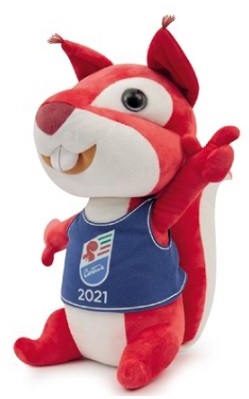
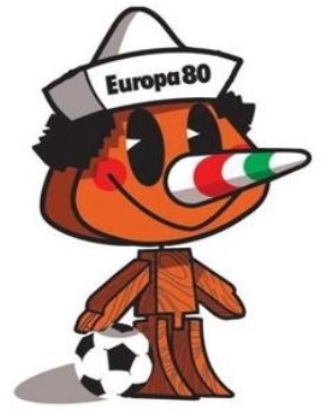
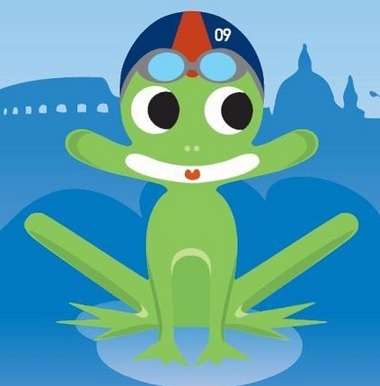
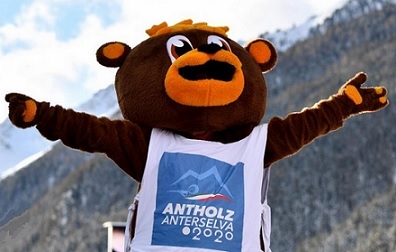
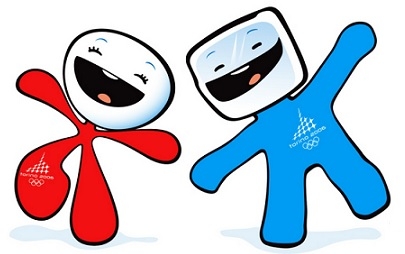
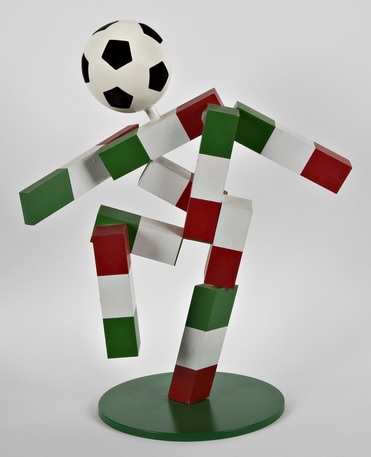
TEAM CHALLENGE Team VOLLY Rank # Total 0 0 0 0 0 0 Volly was the mascotte of Men's Volleyball World Championship 2010 A blue and white swallow with the number 10, a volleyball in his hand and red knee pads. Volly also returned for the men's world championship co-hosted by Italy/Bulgary 2018 Team CORTY Rank # Total 0 0 0 0 0 0 Corty, the red squirrel, was the mascot of the Cortina 2021 Alpine Skiing World Championships Corty is a character who draws inspiration from the tradition and history of Cortina d'Ampezzo, the small rodent is in fact one of the animals that inhabit the woods of the Dolomites. Team PINOCCHIO Rank # Total 0 0 0 0 0 0 Italia '80 was the first UEFA (European) tournament to present a mascot, while they were already used for the World Cup and Olympics. The puppet created by Carlo Collodi, Pinocchio, was chosen and was represented with a balloon under his arm, a tricolor nose and a sailor's cap on his head with the writing Europa 80. The mascot was not initially given an official name because it was believed that the rights to Pinocchio belonged to Disney. When the Collodi Foundation confirmed that the copyright on the book had expired 50 years ago, the organizing committee renamed the official mascot. Team DIVA09 Rank # Total 0 0 0 0 0 0 Was the 2009 World Aquatics Championships in Rome. Frogs symbolize vitality and energy, and also have the ability to adapt to different environments, especially aquatic ones. It is always on the move, just like any athlete. Team BUMSI Rank # Total 0 0 0 0 0 0 Bumsi was the mascotte of Biathlon World Championships 2020 Rasen-Antholz (Rasun-Anterselva). "Bum" has its own meaning, it reproduces with a language the two actions of the biathlon: “bum” (shooting shots); “si” is the phonetic of sci (Italian for SKI) symbolizing cross-country skis. Team NEVE & GLIZ Rank # Total 0 0 0 0 0 0 The two mascotte of Winter Olympic 2016 They both represent the characteristics of the Winter Games, including "Snow and Ice". Neve ("Snow" in Italian) is a humanized female snowball that wears red and represents "softness, friendship and elegance." Gliz (a shortened form of Ghiaccio, "Ice" in Italian) is a humanized male ice cube who wears blue and represents "enthusiasm and joy." Team CIAO Rank # Total 0 0 0 0 0 0 Ciao is the mascot adopted for the 1990 FIFA World Cup in Italy. It represents the stylized figure of a footballer, made up of cubes colored with the national colours, who had a football instead of a head. The mascot immediately divided the public and critics, but unexpectedly it had a great success, it was reproduced in different forms, many gadgets, posters and puppets representing it, a resounding commercial success.
-
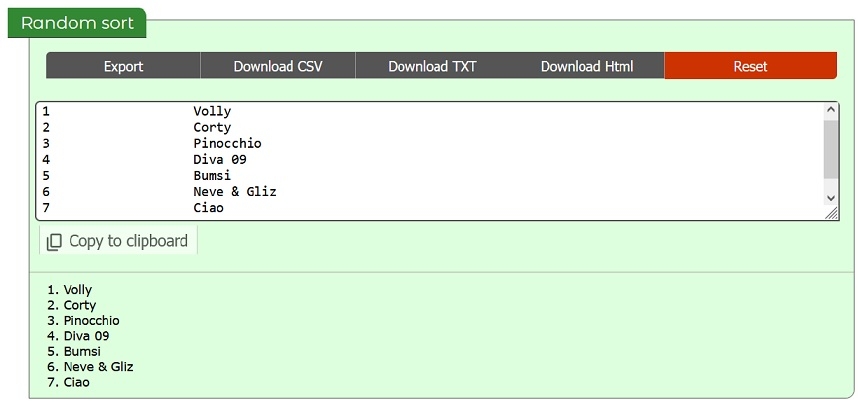
TEAM CHALLENGE The teams will have the name of the mascots used in international events organized in Italy.
-
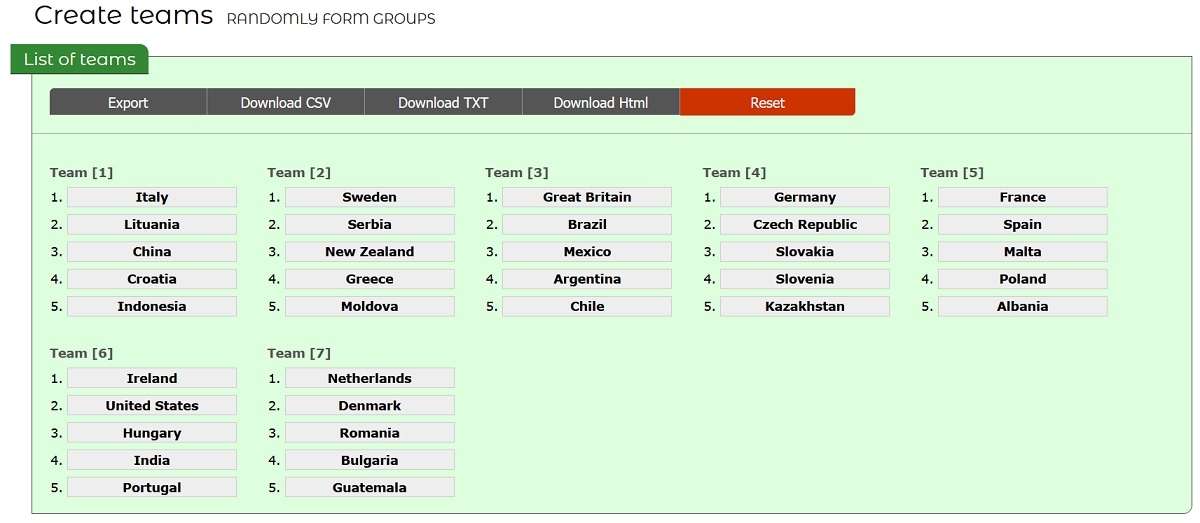
TEAM CHALLENGE Will be an automatic draw will decide the composition of the 7 teams. For the draw the nations will be divided in 5 pots, based the all time ranking medals and participations. > pot 1 >> pot 2 >>> pot3 >>>> pot4 >>>>> pot 5 France Brazil China Argentina Albania Germany Czech Republic Hungary Bulgaria Chile Great Britain Denmark Malta Croatia Guatemala Ireland Lituania Mexico Greece Indonesia Italy Serbia New Zealand India Kazakhstan Netherlands Spain Romania Poland Moldova Sweden United States Slovakia Slovenia Portugal the draw:
-
Congratulations Lara Gut-Behrami and Federica Brignone 27th win, the most successful Italian women skier ever di World Cup
-
Italian Festival ♪♫ ♪♫ ♪♫ In this space we present some dialectical and traditional songs SARDEGNA (Sardinia) No potho reposare “A diosa” is the original title of the most famous Sardinian song, a 1915 poem by the poet Salvatore “Badore” Sini, and subsequently set to music by Giuseppe Rachel. Version performed by two famous Sardinian singers: Maria Carta (1934-1994) & Andrea Parodi (1977 -2006) ♪♫ Zirichiltaggia (Baddu tundu) (Lizardman, round dance) Is a song in Gallurese (Sardinian) written by the Genoese singer-songwriter Fabrizio De André and Massimo Bubola (1978). De André moved to Sardinia (Tempio Pausania) in the mid-seventies. ♪♫ Le Balentes - Cixiri (Chickpeas) 2001 Music and Lyric: Rossella Faa & Augusto Pirodda
-
Italian Festival ♪♫ ♪♫ ♪♫ In this space we present some dialectical and traditional songs SICILIA (SICILY) Ciuri, Ciuri (Flowers, flowers) and Vitti 'na crozza (I saw a skull) are two of the most famous Sicilian songs. The author of the lyrics is unknown, while the music of Ciuri ciuri was written by Francesco Paolo Frontini in 1883, while the music of Vitti 'na crozza by Franco Li Causi in the late 1950s. Both songs are reinterpreted by the Sicilian singer Roy Paci with the group Aretuska ________________________________________________________ Franco Battiato - Veni l'autunnu (Come Autumn) (Music and Lyric Franco Battiato- 1988)
-
Men's Basketball EB European EuroLeague 2023 - 2024
Henry_Leon replied to Henry_Leon's topic in Basketball Results Database
Results Update Event Link Click on the logo to open Regular Season Week 22, Day 2 -
Giro d’Italia Tour of Italy (Not the cycling race) In this space we present some cities inscribed on the UNESCO World Heritage List PISA Pisa is a city and comune in Tuscany, straddling the Arno just before it empties into the Ligurian Sea. Although Pisa is known worldwide for its leaning tower, the city contains more than twenty other historic churches, several medieval palaces, and bridges across the Arno. Much of the city's architecture was financed from its history as one of the Italian maritime republics. The city is also home to the University of Pisa, which has a history going back to the 12th century, the Scuola Normale Superiore di Pisa, founded by Napoleon in 1810, and hosts the largest headquarters of the National Research Council (CNR). The Piazza del Duomo, also known as the square of miracles, is the most important artistic and tourist center of Pisa. Listed among the UNESCO World Heritage Sites since 1987, you can admire some masterpieces of European Romanesque architecture, that is, the monuments that form the center of the city's religious life: the cathedral, the baptistery, the cemetery and the bell tower. The Cathedral: the heart of the complex is the Cathedral of Santa Maria Assunta, the medieval cathedral. It is a five-aisled church with a three-aisled transept. The building, like the bell tower, has sunk perceptibly into the ground, and some damage to the construction is clearly visible. The Pisan Romanesque style was created starting from this church and then exported to the rest of Tuscany, but also to Corsica and Sardinia, once under the control of the Republic of Pisa. The bell tower of Santa Maria: known as "The Leaning Tower" or "The Tower of Pisa", is the bell tower of the Duomo. Below it the ground gave way slightly, causing it to tilt a few degrees. The inclination continued for many years, until it stopped after the restoration work concluded in the early 21st century. Due to construction difficulties, its construction lasted over two centuries (in three different phases of work) starting from the end of the 12th century. The Baptistery: dedicated to St. John the Baptist, stands in front of the west façade of the Cathedral. The building was begun in the mid-12th century, the interior, surprisingly simple and devoid of decoration, also has exceptional acoustics. It is the largest baptistery in Italy: its circumference measures 107.25 m. The Campo Santo: the monumental Camposanto is located at the northern edge of the square. It is a cemetery structured in the form of a cloister, with earthly tombs. The earth inside the courtyard is actually a relic, being earth coming from Mount Golgotha in the Holy Land, transported with several ships by the Pisans after the Fourth Crusade, hence the name "campo" (plot of land) "holy".
-
Men's Basketball EB European EuroLeague 2023 - 2024
Henry_Leon replied to Henry_Leon's topic in Basketball Results Database
Results Update Event Link Click on the logo to open Regular Season Week 22, Day 1 -
Men's Football UEFA European Europa League 2023 - 2024
Henry_Leon replied to Totallympics's topic in Football
have three team in quartefinals, a derby is allowed The draws for the UEFA Europa League quarter-finals, semi-finals and final take place at 13:00 CET on Friday 15 March Atalanta Roma Milan Leverkusen Liverpool West Ham Benfica Olympique Marseille -
Results Update Event Link Click on the logo to open Round of 16 Second Leg
-
Results Update Event Link Click on the logo to open Round of 16 Second Leg
-
Men's Football UEFA European Champions League 2023 - 2024
Henry_Leon replied to Totallympics's topic in Football
0/3 reached quarter finals, not have expected this.... Champions League quarter-final, semi-final and final draws take place at 12:00 CET on Friday 15 March Arsenal Manchester City Paris Saint-Germain Bayern München Borussia Dortmund Barcelona Real Madrid Atlético de Madrid -
Results Update Event Link Click on the logo to open Round of 16 Second Leg, Day 4
-
Men's Football UEFA Youth European League 2023 - 2024
Henry_Leon replied to Henry_Leon's topic in Football Results Database
Results Update Event Link Click on the logo to open Quarterfinals Single Leg, Day 2 -
Men's Football UEFA Youth European League 2023 - 2024
Henry_Leon replied to Henry_Leon's topic in Football Results Database
Results Update Event Link Click on the logo to open Quarterfinals Single Leg, Day 1 -
Results Update Event Link Click on the logo to open Round of 16 Second Leg, Day 3



-
Who's Online 45 Members, 0 Anonymous, 310 Guests (See full list)
- Adriano
- Topicmaster1010
- Ros
- JoshMartini007
- Lewan
- Bear Hollow
- maestro
- orangeman
- Quasit
- hckošice
- De_Gambassi
- intoronto
- Rafal
- MHSN
- Sindo
- suchyy7
- Monzanator
- Andre Han
- AmericaLoL
- NearPup
- Mkbw50
- Jambo
- Vic Liu
- Matteo92
- Roamingrover86
- Gianlu33
- Grassmarket
- Captain
- Jaymz
- Belle
- avlar
- rybak
- Biathlonfan
- Dkats
- FancyFenchel
- Josh
- Jon
- Benolympique
- mrv86
- Triplecast
- Ashes
- Faramir
- George_D
- Ludwig37
- Matej